

Does each of us have our own four minute mile? A personal barrier that we think is not possible to overcome? Is it a lack of belief? For years it was believed that the four minute mile was not possible. That it was physically unattainable.Some medical specialists had the temerity to suggest that the body would break apart before such a speed could be achieved. There has always been a certain mystique about running.Simplistically, running is a matter of placing one foot in front of the other. The problem is that terrestrial objects have a tendency to take flight or to dream obsessively of it. There is even a myth that Tibetan monks can run 300 miles in thirty hours simply by fixating on a distant object and repeating a mantra with each footfall, a spiritual elevation into the runner’s jet stream…

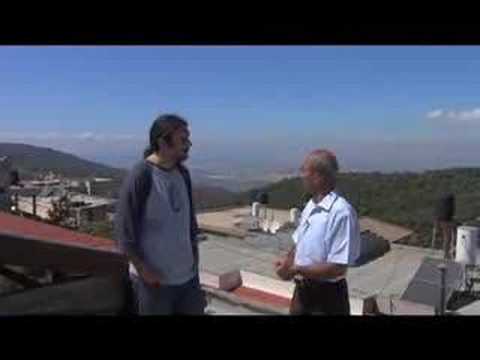
A documentary film that focuses on the long-distance runner Ayele Seteng (AKA Haile Satayin), the oldest marathon runner in the 2008 Summer Olympic in Beijing, and his efforts to compete in the 2012 Summer Olympics in London. Read More:http://viceversa.co.il/
While running appears to fall on the sunny, healthier side of life, fitness and the wholesome, there are deeper and darker drives that animate this idea of repetitive human kinetic sculpture. In a sense, its a philosophic inquiry into obsession. You are asking the body to do something it innately has no desire for. This is namely to participate in a ritual in which the idea of suffering and knowledge are in an uneasy alliance in overcoming pain and fulfilling some redemptive concepts, vague promises, about being alive.
Distance runners are a strange a quirky lot for the most part; running culture seems to have its own particular neuroses and obsessions such as the constant worrying about aging, reflected in ever slower times beyond a certain age. Take John Irving’s Garp, or, columnist and runner Christopher McDougall took his running obsession to the Copper Canyons of Mexico to uncover the mystery of the Tarahumara tribe, who practice techniques that allow them to run great distances, injury free, without rest, and wearing home made sandals.Dexter Filkins kept his sanity while risking his life by filling a profound need to go running in Baghdad during the height of tensions which was enumerated in The Forever War.

Beryl Cook. ---“When you try to boil down fitness, what does fitness mean?” said Dr. Jarett D. Berry, assistant professor of internal medicine and cardiology at Southwestern Medical School and a co-author of both papers. “In both these studies, how fast you can run in midlife is very strongly associated with heart disease risk when you’re old. The exercise you do in your 40s is highly relevant to your heart disease risk in your 80s.” read more:http://well.blogs.nytimes.com/2011/05/23/on-your-marks-get-set-measure-heart-health/ image:http://www.wallcoo.net/paint/Beryl_Cook_CSG/beryl_cook_csg003_six_thousand_women_running.html
In Alan Sillitoe’s The Loneliness of the Long Distance Runner, the lines of battle are easily distinguished. The protagonist, Smith, elaborates his theory of “them” and “us”, otherwise characterised as the “In-laws ” (the law-abiding property-owning majority) and the “Out-laws” (the substantial minority who have no stake in this system). The “In-laws ” are principally embodied in the person of the borstal governor, who is a representative type. The archetypal “Out-law” is Smith, the narrator.


---He crossed the finish line and began sagging to the ground, drained of all his energy. "It was only then that real pain overtook me," he said. "I felt like an exploded flashlight with no will to live; I just went on existing in the most passive physical state without being unconscious." The crowd that had urged him on fell silent. Two track officials held him up while spectators converged on him. The time was announced. "Three ... "--- Read More:http://www.sptimes.com/News/121799/Sports/Bannister_stuns_world.shtml
Smith views life as a battle of wits, in which he confronts the forces of the establishment. His aim is to frustrate their efforts to make him conform, and thereby to assert his integrity. Smith’s one great talent, running, is both a symbol for this struggle as it persists throughout his life, and also the means by which he hopes to disappoint and deceive the governor. By training hard and appearing eager to win the Blue Ribbon Prize Cup -as he can do if he wishes- he causes the governor to anticipate the credit this will reflect on his pretended humane outlook. In fact it is because he runs alone, that Smith,so he tells us, has learned to think clearly enough to devise this strategy. To win the race would be to accept the values and outlook of the governor and all his kind. To lose the race may seem to be cutting off his nose to spite his face, but is the only way Smith can retain his independence, and know he has retained it.

Tarahumara. Mexico. ---From the study data, Dr. Berry calculated that a man in his 50s who can run a mile in 8 minutes or less, or a woman who can do it in 9 minutes or less, shows a high level of fitness. A 9-minute mile for a man and 10:30 for a woman are signs of moderate fitness; men who can’t run better than a 10-minute mile, and women slower than 12 minutes, fall into the low-fitness category. Read More:http://well.blogs.nytimes.com/2011/05/23/on-your-marks-get-set-measure-heart-health/ image:http://www.gardenvarietytri.com/archives/75
Smith constantly refers to the way the governor thinks of him as like a race-horse. He suggests that the achievements of such a thoroughbred are determined by, and earn glory for, others: for the trainer, rider and owner. Just so, Smith is trained for a competitive race, and valued for the prestige his expected victory will win for the governor and the “enlightened ” regime in his borstal.

---Like Burton in Look Back in Anger or Bronson in Bronson, Tom Courtenay in TLOTLDR is angry, though less flamboyantly so. He doesn't release his anger in bouts of violence or verbal assault. Instead, he runs like the wind, channeling his festering emotions into the many miles he logs over boggy though beautiful black and white British landscapes. Though milder than Burton or Bronson, Courtenay's angry feelings have focus. Perhaps it's even better to call them a series of healthy resentments. And he's trying to burn every last one of them off like bad calories. Courtenay resents the factory where his father worked and died for no more than 500 quid life insurance payout. He resents his mother more so for cashing in that 500 quid a day after the funeral to buy a new telly and a brand new suitor. He resents the bakery that left its window open and made it so easy for him to rob. He resents the fellow detainees at his new Borstal lock-up for trying to ass-kiss the Governor. But more than all of that he resents himself when he becomes the Governor's star runner in the b
ace race against a local prep school. It's time for him to do something about all this resentment...or better yet NOT do something about it....Read More:http://cashiersdecinema.blogspot.com/2010/03/loneliness-of-long-distance-runner-1962.html
Is running about battling pessimism? Smith’s pessimism is declared at the beginning of the story: not that “them ” and “us” don’t “see eye to eye”, but that “that’s how it stands and how it will always stand”. The pessimism is not in his sense of two classes, but his belief that this can never change. Later Smith comments on his and the governor’s cunning, observing that his is the more devious, as he sees through the governor, while the governor’s does not see through Smith’s intentions….

---Anyway, I wrote to you about this long living, disease free, injury free, marathon running, beer drinking, chia seed eating tribe in the summer of '06. My fastination with the Tarahumara, combined with a very painful first marathon in '05, lead me to change my running style. I now run like an indian, and I'm starting to do it in my 'Five Fingers".--- Read More:http://1010wellness.typepad.com/my_weblog/2009/06/built-for-the-long-run.html
ADDENDUM:
…Today’s abandoned speed-work has reawakened a question that has been stirring about in my mind recently as I write about joy and acceptance and Buddhist running: what is the boundary between acceptance and settling? This focuses on one of the aspects of Buddhism that I have always wrestled with, as a philosophy that is founded on a fundamental disbelief in any inherent or tangible reality lends itself to a touch of nihilism. I have written on numerous occasions about how running and Buddhism help me find joy when my life is filled with frustration, and that much of that joy comes from the freedom of acceptance, that there is nothing inherently “good” or ”bad” about phenomena, and that it our attitude towards them, our clinging to various concepts and preconceptions, that cause them to be perceived as “good” or “bad.”…

---“The gym teacher was also the basketball coach,” Ryun said. “He invited me to try out. I was thinking I was going to be a famous basketball player and make a lot of money. Halfway through the first practice, he told me to hang my jersey on the door. He cut me before the first practice was over. He was only doing his job.” When he was in junior high and holding his grandmother’s Bible, Ryun said a quick prayer: “Dear God, if you’ve got a plan for me, I wish you’d show up soon with it.”...Ryun went out for track in junior high and had a plan to stay one step ahead of the chopping block. “I started out as a sprinter,” Ryun said. “As soon as it was time for the coach to come up and cut me, I switched to the hurdles. Before he could cut me, I did the pole vault. And when I was about to get cut, I became a high jumper. I rotated all around so that I wouldn’t get cut. Once I got to the quarter-mile run, I survived.” He remembered his first quarter-mile race on a cinder track. “We never trained for it,” he said. “They’d bring out the pistol and shoot the gun to start it. The first part was great, the last part terrible.” Read More:http://www.ktka.com/news/2010/oct/14/mile-stone-ryun-wants-see-4-minute-mark-challenged/
…Was abandoning today’s speed work an act of accepting my current state and ability, or was it a sign of weakness, of not staying firm in the face of adversity and challenge? The other day, running allowed me to accept the terrible day I was having with my students – but at what point should I stop accepting terrible days and seek something that makes me happier? When does calm acceptance become settling for a miserable existence which could, in fact, be changed? When does Buddhist patience merely become an exercise in masochism and self-flagellation, or worse, compliance with injustice and cruelty? Read More:http://whenitalkaboutrunning.wordpress.com/2011/06/07/the-runners-prayer-3-8-miles/

---She was the 20th of 22 children. She spent much of her childhood in bed with a variety of illnesses. At age six she contracted polio, lost the use of her left leg, was fitted with metal leg braces, and was told she would never walk. Determined to be “normal,” she worked hard to get rid of the braces. She became a star basketball player and caught the eye of Tennessee State track coach Ed Temple. He wanted to turn Rudolph into a sprinter. He got his wish at the 1960 Summer Olympics in Rome, Rudolph became the first woman to win three gold medals, all in sprinting, in one Olympics. --- Read More:http://peaceinjesus4vietnamese.org/WilmaRudolph.aspx
—————————————————————–
Dexter Filkins:I pulled on my running shoes and stepped into the sweltering streets. It was a Thursday in July 2003, twilight, and well over 100 degrees. I was feeling a little reckless. If this ended badly, the only thing anyone would remember was how stupid I was.
…In the beginning, Baghdad wasn’t that threatening. The other houses around us were either abandoned or rented by foreigners: the French Embassy and the BBC were around the corner. And the Iraqis in the neighborhood were friendly, waving whenever we passed. Running at night seemed reckless, but given the otherworldy heat, running during the day was impossible.
So I set off. The reaction of my neighbors was immediate. I felt like a revelation, like a prophet. Men looked up and waved; they held up bottles of water as I ran by. “Good, good!” one man said in English. “America good!” Abu Nawas was lined with fish restaurants that overlooked the Tigris; as I passed, men held up chunks of masgouf, their beloved bony fish, and asked me to join. Children stopped their soccer games and ran after me; even the stray dogs gave pursuit. I felt I was living the scene in the movie “Rocky II,” when the character played by Sylvester Stallone goes for a training run in his Philadelphia neighborhood and all the children clamor after him.
I started running that same route every evening after that, usually well into twilight but early enough that the streets were still filled with people. My reception was always the same: cheering crowds, squealing children and happy stray dogs. In an odd but real way, my five-mile runs up Abu Nawas Street made me wonder what the war in Iraq was all about. All day long reporting in the country, I encountered hostility and chaos, which was intense and growing and very real. And yet at night when I hit the streets, in the fall of 2003, I could not find a trace. It was as if the city, in the heat of the afternoon, had exhausted itself, only to lighten with the setting sun. Read More:http://www.nytimes.com/2008/08/24/magazine/24filkins-t.html



 COMMENTS


